This page is intended to serve as a jumping off point on general topics of Ashtanga Vinyasa Yoga practice. It is not comprehensive, but my hope is to get you curious to explore further. I am continuously updating it. Please send me suggestions.
I intend no partisanship or offense with this page. This is my understanding and any mistakes are my own.
What Makes Ashtanga
Ashtanga as a practice has a few distinctives. I like to view it as a bridge between ancient Hatha practices and modern ideas. The genius of Sri K Pattabhi Jois was his openness to sharing, synchretism, organization, and teaching methodology.
The following is from David Williams. This is how Ashtanga was described to David and Nancy in their first yoga session in Mysore (1973):
“I am going to teach you a classical method of yoga that is more than 5,000 years old. This is the most ancient form of yoga. We know the lineage of yogis who have passed it down, all the way back to the first yogi, Lord Shiva. It is taught move by move, breath by breath. This is an exact method. You must promise that you will not change it. Classical means unchanged over the centuries.”
In typical style, we know that he was being humble in this description and that he thoughtfully modified and changed the practice. However, I believe the emphasis on tradition and honoring those who have shared the practice with you (parampara) is a worthwhile custom to carry forward–even when you adjust things. Everyone loves a good origin story, too!
Breath, Body locks, and Gazing point
A consistent emphasis across all areas of practice is the focused intention of movement regulated by the breath, the use of various body locks to stabalize and strengthen, and a soft-focused gaze at specific locations. When done together what was exercise turns into yoga and your practice becomes meditative. And the count–there is so much numerology in Mysore’s culture.
David Swenson’s Five Elements
I really appreciate this model from David–and his teaching style in general! In his view, there are five elements to Ashtanga Vinyasa Yoga practice:
- Vinyasa: breath-connected movement.
- Ujjayi Breath: deep breathing with sound.
- Drishti: the focus and object of your gaze in each asana.
- Bandhas: body-locks.
- Asanas: the various postures composing the practice series.
(My own additions, begging David’s pardon):
- Count: the joining together of all previous steps bounded by a uniform count.
- Mantra: specific vocalization-based vibrations to orient the practice.
Is that all?
A sidebar from Manju
Why do you want to learn all those things? They’re just stories. Focus on yourself, learn your story–that is called yoga!
Story time again.
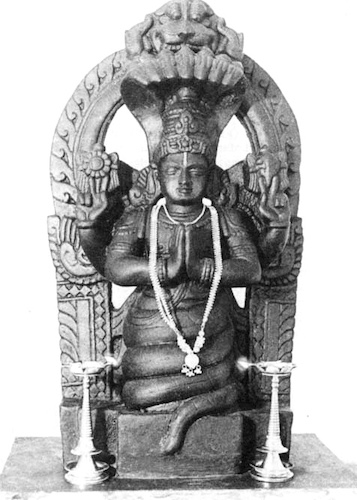
Between the second century BCE and the fifth CE, there lived a sage named Patanjali who codified a devotional path based on Sankhya Philosophy called Yoga into a collection a aphorisms (Pātañjalayogaśāstra). Those Sutras (short statements) pack a ton of information, and there have been commentaries on them published and circulated ever since.
One of the things Patanjali described is an eight-fold system, or path. Ashta in the Sanskrit language means eight. Ashtanga Yoga (2:29 - 3:55) means eight limbs, or elements of yoga practice (there’s that numerology again).
They are, in order:
- यम Yama: restraints or ethics of behavior.
- नियम Niyama: observances.
- आसन Asana: postures.
- प्राणायाम Pranayama: breath/prana control.
- प्रत्याहार Pratyahara: sense withdrawl.
- धारणा Dharana: concentration.
- ध्यान Dhyana: meditation.
- समाधि Samadhi: realization.
Yoga practice in the west is mostly about step number 3, asana, in Patanjali’s sutra. I think most people are unaware that they are missing 7/8ths of the practice! Ashtanga Vinyasa Yoga is a complete system, and as Sri BNS Iyengar likes to point out, it’s Patanjali Yoga.
Given the above, practicing Ashtanga Vinyasa Yoga is a more complete practice than what you will typically find in the local stripmall studio. Bandha, Ujjayi breath (Pranayama), and Drishti all help us focus (Dharana) and over time they become almost meditative (Dhyana). A thoughtful, intention-filled practice then turns into something more than just postures.
Where did this practice come from?
Ashtanga is a way of practicing yoga, as you’ve learned in the sections above. Within that specific way of practicing there is a lineage of teachers who have influenced the practice as they pass it on. This section is intended to serve as a survey and respectful way to highlight–and celelbrate–those teachers and their distinctives and areas of emphasis.
Sri T Krishnamacharya (1888 - 1989)

Krishnamacharya was a scholar and yogi born into the Srivaishnaiva community of the Mysore Kingdom, of which he was twice offered the position of Acharya. He held degrees in all six darshanas, a long patronage of the King of Mysore, and was a direct descendant of the head of the Parakala Math.
Krishnamacharya codified and propogated his approach to yoga; variously called Viniyoga and Vinyasa Krama Yoga. All modern schools of yoga in the west are strongly influenced by his practice, ideas, and pedagogy.
In the case of Ashtanga Vinyasa Yoga, Krishnamacharya was the department head and chief instructor at the Sanskrit College of Mysore where he taught Pattabhi Jois and BNS Iyengar.
Sri K Pattabhi Jois (1915 - 2009)
“Each morning, wake up. Do as much yoga as you want. Maybe you’ll eat, maybe you’ll fast. Maybe you’ll sleep indoors, maybe you’ll sleep outdoors. The next next morning, wake up. Do as much yoga as you want. Maybe you’ll eat, maybe you’ll fast. Maybe you’ll sleep indoors, maybe you’ll sleep outdoors. Practice yoga, and all is coming!” –Sri KP Jois to David Williams, 1975
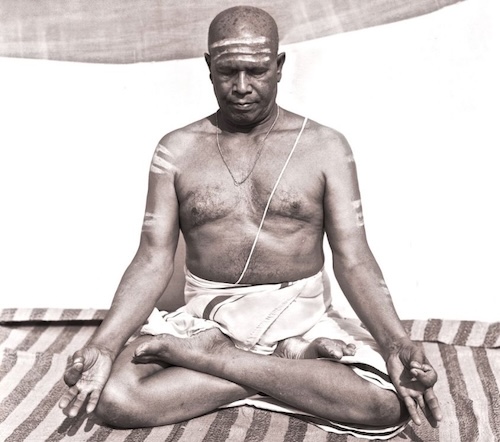
A direct disciple and teaching assistant of the father of modern yoga, Sri T. Krishnamacharya. His Ashtanga Yoga Research Institute in Mysore established and propogated the practice we all enjoy today. His influence in modern yoga practice cannot be overstated. Vinyasa, Power Yoga, etc. are all direct distillations or outright copies of his practice, stripped of the cultural underpinnings and devotion that make yoga yoga.
He held a teaching position at the Sanskrit College of Mysore by appointment from the Maharaja as a professor and eventually the department head of yoga. The necessity of an ordered progression and syllabus may have influenced his asana arrangement into the series we know today. Early American disciple David Williams has copies of the original series, which you can find in his memoir.
By most accounts, he could be alternatively warm and demanding in practice. Manju, his eldest son, states that asana practice early on was fun and his father could be a prankster. He would adapt the practice to the student and started from a mindset that yoga is a healing and spiritual practice for everyone. Later on, as his popularity and number of students grew, he altered the practice to fit the demands on his time and attention–and maybe what people were asking for. This pushed learning Pranayama and the other limbs back farther from their previous placement.
Sri BNS Iyengar
“Yoga is not just exercise. It is a way to see the soul.” –Sri BNS
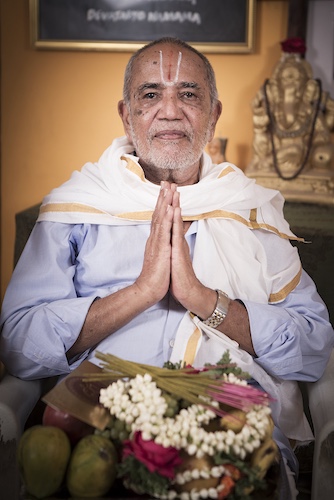
A direct disciple of the father of modern yoga, Sri T. Krishnamacharya. After Krishnamacharya moved to Pune, he continued asana practice with Pattabhi Jois who took over asana teaching at the Sanskrit College. He eventually developed an alternative form of Ashtanga Vinyasa Yoga with deep focus on Pranayama and Mudra rather than a purely athletic Vinyasa.
His teaching style does not require you to master every asana before moving on, much like Manju. His specialty and emphasis is on Mudra, Pranayama, meditation, and the higher limbs of yoga. Practice with BNS focuses on Tapas, discipline, and dedication–and is enjoyable, avoids injury, competition, or harsh self-judgement. Expect Mantra (Vedic Chanting) and early exposure to Pranayama practices. A led class with him can get through the entire primary series in under an hour! This summer, 2026, marks Guruji BNS’s 100th birthday.
Smt. Saraswathi Rangaswami
“Let everything come in it’s own time. A plant and tree needs proper time to grow under right conditions, why should we human beings be any different. To grow into yoga means growing into life, proper conditions need to be there, but when start to feel it; you’ll come to know it is real.” –Smt Saraswathi
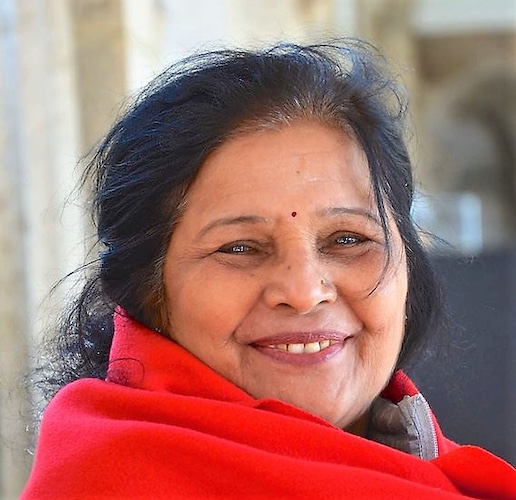
Daughter of Pattabhi Jois and mother of Sharath, Saraswathi is a force in her own right. She is the senior-most female teacher of Ashtanga Vinyasa Yoga.
She was the first girl admitted to the Sanskrit College of Mysore. She went on to assist her father in teaching and in 1986 she became the first woman ever to teach yoga to men and women together in Mysore. She is welcoming and happy to teach anyone from any background.
Her style of instruction is more direct and conservative-minded. Expect high levels of discipline, firm corrections, and a deep emphasis on the sanskrit count.
Sri Manju Pattabhi Jois
“The Western world has a tendency to focus only on the physical side. This is NOT yoga. You are only practicing yoga and getting the complete benefit when you combine the physical with the spiritual. You can’t do one without the other because it causes confusion. If you only practice the physical side you become physically strong but spiritually weak.” –Sri Manju
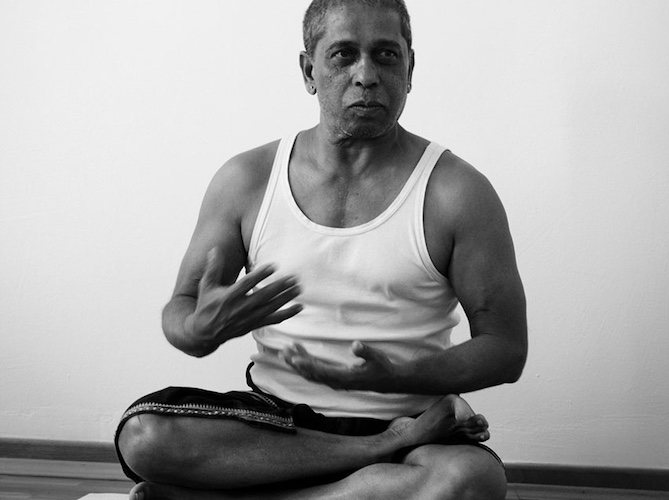
Eldest son of Sri KP Jois. Warm, welcoming, and focused on keeping yoga practice fun, devotional, and therapeutic. He traveled around India in the late 60s giving asana demonstrations and propogating the practice.
Following an invitation from David Williams and Nancy Gilgoff, Manju immigrated and naturalized to California, USA, where he still teaches today. Immersion in western society has helped him to bridge the cultures and authoritatively share yoga practices with people from all backgrounds–particularly in North America and Europe where he mentors and authorizes many teachers.
A distinctive of Manju’s practice is the emphasis on learning Mantra (Vedic Chanting)–which he calls “yoga for the throat”. Manju’s mantra practice is beautful and fun, and he’ll sometimes insert them throughout asana practice. He will also suggest holding an asana much longer than the now-standard five breath count to work on embodying a pose. Manju will adapt the practice to the individual by modifying or skipping asanas, and his focus is on yoga as a healing practice.
Sri Sharath Rangaswami (1971 - 2024)
“Many people think yoga is like a gym, or like going to a work out, but that is not yoga. Nowadays, it has become a trend to take a yoga course for something like one month, and then you are able to say that you have become a teacher. But that is not yoga. Yoga is spiritual. You should consider it a spiritual practice, not just exercise. Spiritual.” –Sri Sharath
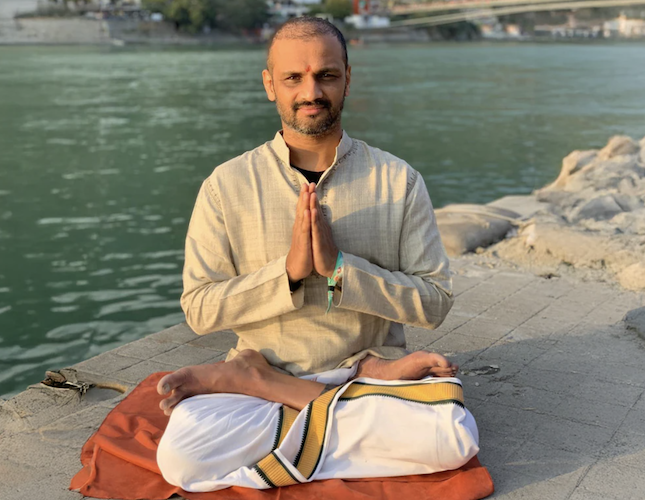
A direct disciple of Sri KP Jois and inherited his grandfather’s school in Mysore. Expanded his grandfathers teachings into a global authorization body and massive school in Mysore. Provided standardization, pushed strict uniformity, and technical mastery.
It is safe to say that the vast majority of folks to learn Ashtanga post-2000 have been influenced by Sharath’s pedagogy and practice.
Spirituality & Religion
Yoga is one of the classical systems within Indian intellectual tradition. It could more specifically be called Sankhya-Yoga. The sage Patanjali assumed the metaphysics of Sankhya into his eight-fold path of liberation from ignorance: variously called self-realization, self-actualization, self-knowledge, and transcendence.
Sankhya is non-thiestic, it assumes no God. It is a dualistic, orthodox school of philosophy that provides a metaphysics distinguishing between consciousness (Puruṣa) and nature (Prakṛti), including the human mind. An athiest comfortable with dualism would find no trouble adopting its views.
Yoga layers onto this Sankhya system an ethical code (Yamas and Niyamas), physical postures (Asana), and a personal diety (Ishvara).
Is yoga a religion? No. There is no worship in the Yoga system.
Does Yoga presuppose a diety? Yes. Yoga includes spiritual practices that aim to give you experiences, and ultimately, to guide you along a path towards liberation.
What does that mean? Someone who subscribes to Advaita Vedanta, like Issherwood, would substitue the non-dual Atman-Brahman concept for Purusha-Prakriti (see his translation of the Yoga Sutras for more). A Srivaishnava adherent, like Sri T. Krishnamacharya, would claim that Vishnu alone is independent and so Atman (soul) is independent of Brahman (Vishnu, God)–“qualified” dualism.
And those are just two classic examples of a thiestic argument within the Indian tradition. There is a millenia worth of fascinating inter-referential philosophical thought across all of these traditions. You don’t have to be a Vedantist or subscribe to Sanātana Dharma, but you should be a respectful and mature thinker. Ultimately, you chose how deep you want to go.
The point is, you bring your faith with you. Practicing a transcendental system like Yoga without a faith in a personal diety (God, ultimate reality, consciousness, whatever) is a bit pointless–the goal of Yoga is to be liberated. Or, as Sri BNS insists, “Yoga is to see God!”
And honestly, you don’t have to believe any of this. When you practice real Yoga, it’s happening whether you believe it or not.